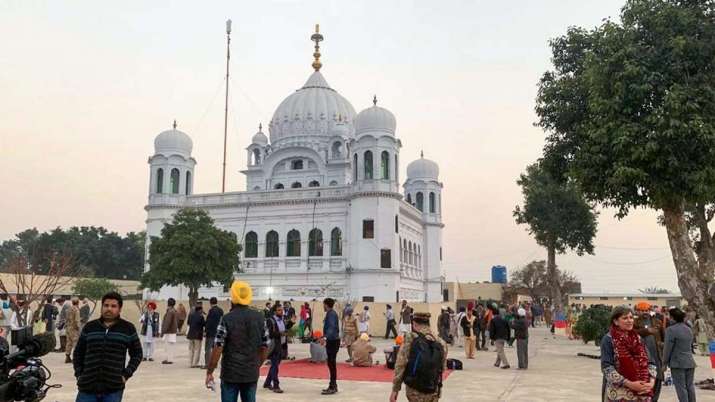
 Pakistan on Tuesday urged India to reopen the Kartarpur Corridor from its side and allow Sikh pilgrims to visit the holy site for the upcoming Guru Nanak Dev’s birthday celebrations.
from IndiaTV India: Google News Feed https://ift.tt/3C14oVi
via
Pakistan on Tuesday urged India to reopen the Kartarpur Corridor from its side and allow Sikh pilgrims to visit the holy site for the upcoming Guru Nanak Dev’s birthday celebrations.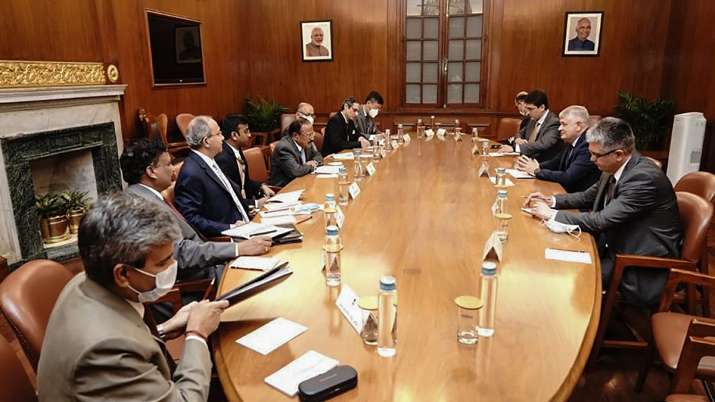 Ahead of a regional security dialogue on Afghanistan, NSA Ajit Doval and his Uzbek counterpart Victor Makhmudov on Tuesday held that the new Afghan regime should first seek legitimacy within that country before looking for international recognition, official sources said.
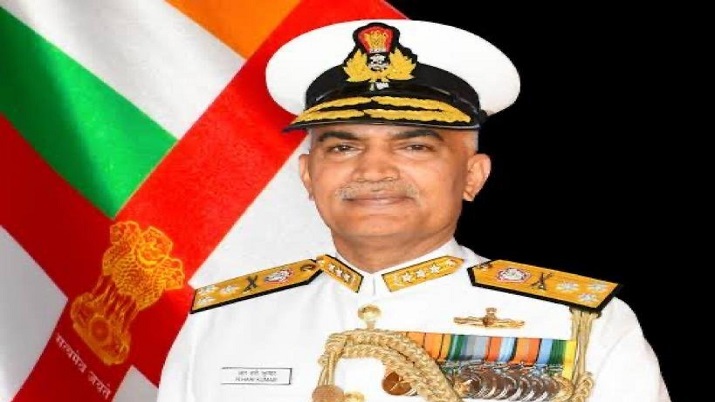 Vice Admiral R Hari Kumar will be the next Chief of Naval Staff, the Defence Ministry announced on Tuesday. Vice Admiral Kumar is presently serving as the Flag Officer Commanding-in-Chief of the Western Naval Command.
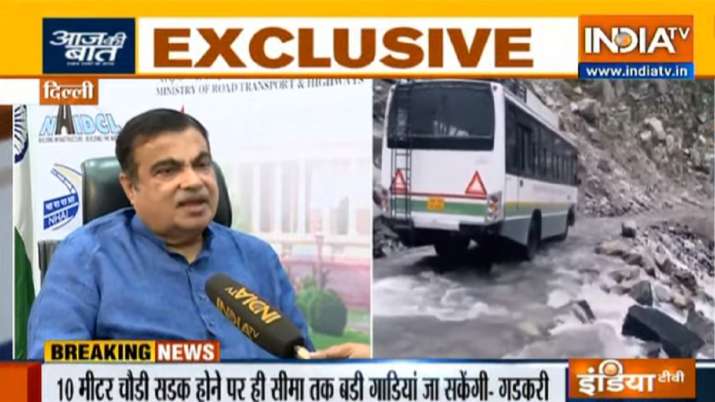 The Centre on Tuesday told the Supreme Court that China has made a huge build-up in the Tibet region and the Army needs broader roads to move heavy vehicles up to the India-China border to avoid a 1962 war-like situation. The Supreme Court was hearing a petition filed by an NGO against a section of Char Dham all-season roads being constructed in the strategically important region.
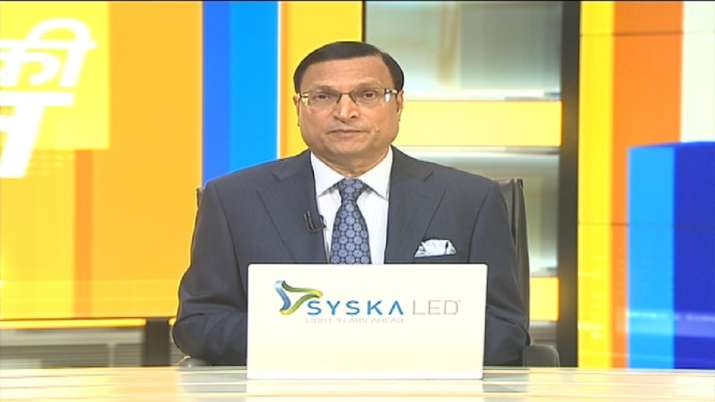 Since Diwali, Delhi had been witnessing smog in the morning due to air pollution. On Monday, people across the world watched visuals of the Yamuna river in Delhi covered with froth, and Chhath Puja devotees standing waist-deep in the river. Despite a huge spend of nearly Rs 5,000 crores by Delhi, Haryana, and UP on cleaning up the Yamuna over the years, the result is disappointing. The water of Yamuna in Delhi is blackish, and it is neither fit for drinking nor bathing nor even washing hands. Thus Delhi is facing a twin danger of both severe air and water pollution. Experts say, bathing in a river filled with froth could cause skin diseases. As the four-day Chhath Puja festival began on Monday, there was politics over devotees bathing in the Yamuna. While Delhi Disaster Management Authority has banned rituals on the Yamuna banks, BJP workers led by local leaders went with groups of Purvanchal devotees for the rituals on Monday morning. During Chhath Puja, water from the river is taken for preparing ‘prasad’ and food, and the water is sprinkled inside homes. Seeing the abysmal quality of Yamuna water beneath the foam and froth, one wonders how devotees would be carrying out the rituals. The visuals of the Yamuna frothing near Delhi’s Kalindi Kunj could make one wonder whether these are from Alaska’s sub-zero temperature region, or of a glacier melting in Antarctica or of a river covered with ice. The Yamuna is the lifeline of Delhi. Water from the Yamuna upstream near Wazirabad and Sonia Vihar is used for drinking purposes, while the Yamuna downstream carries industrial effluents and waste from households. The levels of biochemical oxygen and dissolved oxygen in the Yamuna river are of very poor quality and not fit for even bathing, experts say. The question is: what has happened to the Yamuna Action Plan and all other projects for which money was sanctioned, but all efforts went down the drain? Let me state the facts. Delhi government has so far spent Rs 2387 crore on ‘cleaning’ the Yamuna. Neighboring states Haryana and UP were also supposed to spend money on cleaning this river. UP government spent Rs 2052 crore, while the Haryana government spent Rs 549 crore on ‘cleaning’ Yamuna. Adding all the money spent by these three states, it comes to Rs 4988 crore. The result: the Yamuna continues to be a river of filth in Delhi. You will be surprised to know, Delhi government has already spent Rs 1,514 crore under Yamuna Action Plan-1 and Yamuna Action Plan-2. Seventeen projects estimated at Rs 3941 crore were approved for cleaning the Yamuna under the ‘Namami Gange’ plan. The Yamuna Action Plan was implemented way back in 1993. Twenty-eight years have passed and the Yamuna is still a river filled with garbage. Charges flew back and forth between BJP and AAP leaders on Monday over the dirty Yamuna. BJP leader Manoj Tiwari reminded people of how Chief Minister Arvind Kejriwal had promised to make the Yamuna as clean as the river Thames of London. Tiwari demanded that the Supreme Court should take suo motto cognizance of the fact and seek accountability from the Delhi government. In reply, AAP leader and Delhi Jal Board vice-chairman Raghav Chadha blamed neighboring states Haryana and UP for collectively releasing 150 million gallons per day of untreated sewage into the Yamuna. On the frothing of Yamuna river at Kalindi Kunj, Raghav Chadha said, water filled with huge amounts of surfactants falls into Kalindi Kunj from a height, which causes foam. He blamed the Haryana government for the rising toxicity in the Yamuna river. Politics apart, the fact remains that BJP, Congress, and Aam Aadmi Party have been in power in Delhi for the last three decades. The 1,400 km long Yamuna flows only 22 km in Delhi, and it is the Delhi government’s responsibility to keep the river clean. Chadha has blamed the UP government too. He said, the Okhla barrage near Kalindi Kunj is operated by the UP government, but UP minister Siddharth Nath Singh said, the state government is responsible only for the flow of water at Okhla barrage, and not for treating water. He advised Delhi government to set up more STPs (sewage treatment plants) so that the Yamuna can remain clean. Experts say, detergent making factories in Delhi release untreated waste full of phosphatic chemicals which while reacting with acidic water cause foam. This, they said, can be stopped by strictly enforcing National Green Tribunal guidelines. Under the Yamuna Revitalization Plan, it was proposed to ensure the only permissible limit of pollutants in waste being released in the Yamuna, but nothing much has happened during the last two years. A monitoring committee set up in 2018 by NGT was dissolved in January this year. Among the main reasons for Yamuna pollution are low water levels, 18 drains (mainly Najafgarh and Barapullah) releasing sewage into the river. The Najafgarh drain also carries waste released by factories in neighboring Gurugram and Manesar. After Wazirabad, it is the Najafgarh drain that falls into the Yamuna, polluting water and lowering oxygen levels. The question is: what is the Delhi government doing? One month ago, Delhi Pollution Control Committee prepared a report. It says daily 720 MGD (million gallons per day) sewage (water waste) is produced in the capital daily. Delhi government claims there are 34 STPs (sewage treatment plants) working at 20 locations across the capital, which have a collective capacity of treating 577 MGD waste daily. The report says these STPs do not work to optimum capacity. They can treat only 514 out of 577 MGD of waste daily. It means, 11 percent of waste falls directly into the Yamuna. In other words, 206 MGD of waste out of a total of 720MGD of waste, falls into the river directly, untreated. Delhi government had told the monitoring committee that its STPs would be able to treat 99 percent of waste by June 2019, but more than two years have passed. The Interceptor Sewage project is presently only on paper. More than 40 lakh people live in 1700 colonies across Delhi. Only 561 colonies have sewer lines. From the rest of the colonies, sewage gets dumped into the Yamuna through drains directly. Pollutants found in solid waste at some locations are 760 times more than the “desirable level”. What, then, is the solution? Broadly, it requires two important steps. One, raise the water flow level in the Yamuna round the year. It means neighboring states must release more water in the Yamuna during the lean season. A report from the National Institute of Hydrology, Roorkee, says the Yamuna, in Delhi, requires 23 cusecs of water during the lean season. Since inter-state agreements are existing already, implementing this is not an easy job. Two, more and more sewage and waste must be treated by installing more STPs. Work is already going on for installing STPs at Rithala, Kondli, Yamuna Vihar, and Okhla. In the coming years, 42 STPs are proposed to be installed. Moreover, in 595 colonies, sewer pipes are being laid, to ensure that sewage is treated before entering the Yamuna. A strong political and administrative will is the need of the hour. At present, this seems to be lacking. Policies (neeti) are framed, but the intent (neeyat) is lacking. Whether it was the BJP, or Congress, or AAP, all the three parties promised a cleaner Yamuna, but it did not happen. On November 13, 2015, chief minister Arvind Kejriwal had gone to perform Yamuna Aarti at Yamuna Ghat, ISBT. He had then promised he would rejuvenate the Yamuna in the next five years. The world saw on Monday what happened to that solemn promise. Both the Centre and states spent nearly Rs 5000 crore to clean up the Yamuna over the years. The loan was taken from Japan for this purpose. All the money has gone to waste, it went down the drain that is called the Yamuna. Since 1993, deadlines for cleaning the Yamuna were set and then extended several times. A new deadline has been set now. National Capital Region Planning Board has set 2026 as the year by which the Yamuna will become clean. Delhi’s AAP government has promised to clean the Yamuna by 2023. I think, until and unless all the three state governments work in tandem with the Centre, Yamuna cannot be cleaned. People will have to join this mission too. They must stop throwing waste into the Yamuna. Only then can we realize the dream of having a clean Yamuna river in Delhi.
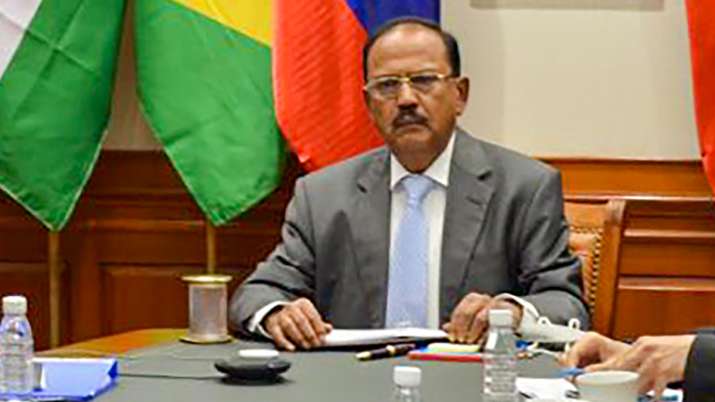 Pakistan and China have refused to participate in the Delhi Regional Security Dialogue on Afghanistan. The dialogue will see National Security Advisors (NSAs) of all Central Asian nations coming together to discuss the prevailing situation in Afghanistan where the Taliban took control after the exit of American forces. This will be the first such meeting of the NSAs after the fall of Afghanistan to the Taliban in August.
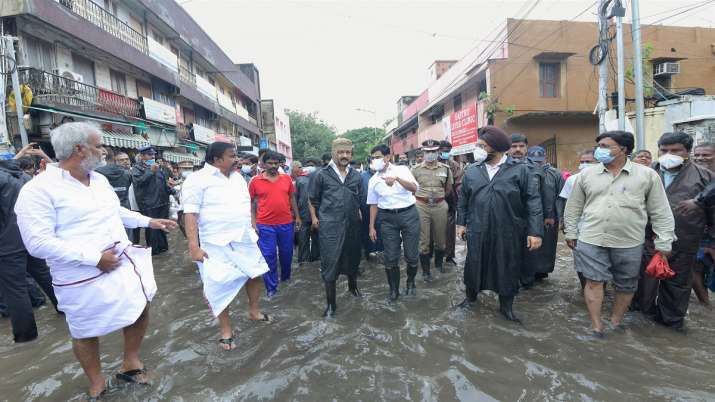 The death toll in Tamil Nadu due to rain-related incidents on Tuesday jumped to five, said Tamil Nadu Revenue and Disaster Management Minister KKSSR Ramachandran. He added that 538 huts were damaged and four houses fully damaged. “More damage expected if rain intensifies,” the minister further said. Several areas of Tamil Nadu, including Chennai, have witnessed heavy rainfall in the past two days. To clear water-logging, inundation of subways, and rain-related tasks, Greater Chennai Corporation deployed 23,000 personnel who slogged amid showers to restore normalcy. The Meteorological department advised 'alert' and preparedness on Tuesday for Nilgiris, Coimbatore, Dindigul, Theni, Tenkasi, and Tirunelveli districts. In a bulletin, the department said the cyclonic circulation over the southeast Bay of Bengal and adjoining south Andaman sea, extending up to 5.8 kilometers above the mean sea level, persists.
Republic Day 2024 : As India's 75th Republic Day Parade kicked off in the national capital, a 30-member band contingent and a marching c...